Whether the ADAT matters for you depends entirely on one question: where are you applying?
If you're a U.S. dental student applying to specialty residencies — orthodontics, oral surgery, endodontics, periodontics — the ADAT is optional. No U.S. specialty program requires it for the 2025-2026 cycle. Some accept it, some ignore it, and a few explicitly won't consider your score even if you submit one.
But if you're an international dental graduate targeting Canadian advanced standing programs? The ADAT isn't optional. It's mandatory. At McGill, it accounts for 70% of your preliminary assessment. At the University of Toronto IDAPP, it's a hard requirement.
Same exam. Completely different stakes depending on your path.
This guide breaks down who actually needs the ADAT, where it matters, and whether the time and money investment makes sense for your specific situation.
What the ADAT Actually Is
The ADAT is a standardized exam administered by the American Dental Association's Department of Testing Services. It's designed to assess readiness for advanced dental education — specialty residencies, advanced standing programs for international graduates, and post-doctoral training.
The structure:
| Section | Questions | What It Covers |
|---|---|---|
| Biomedical Sciences | 80 | Anatomy, biochemistry, physiology, microbiology, pathology |
| Clinical Sciences | 80 | Standalone and case-based clinical questions |
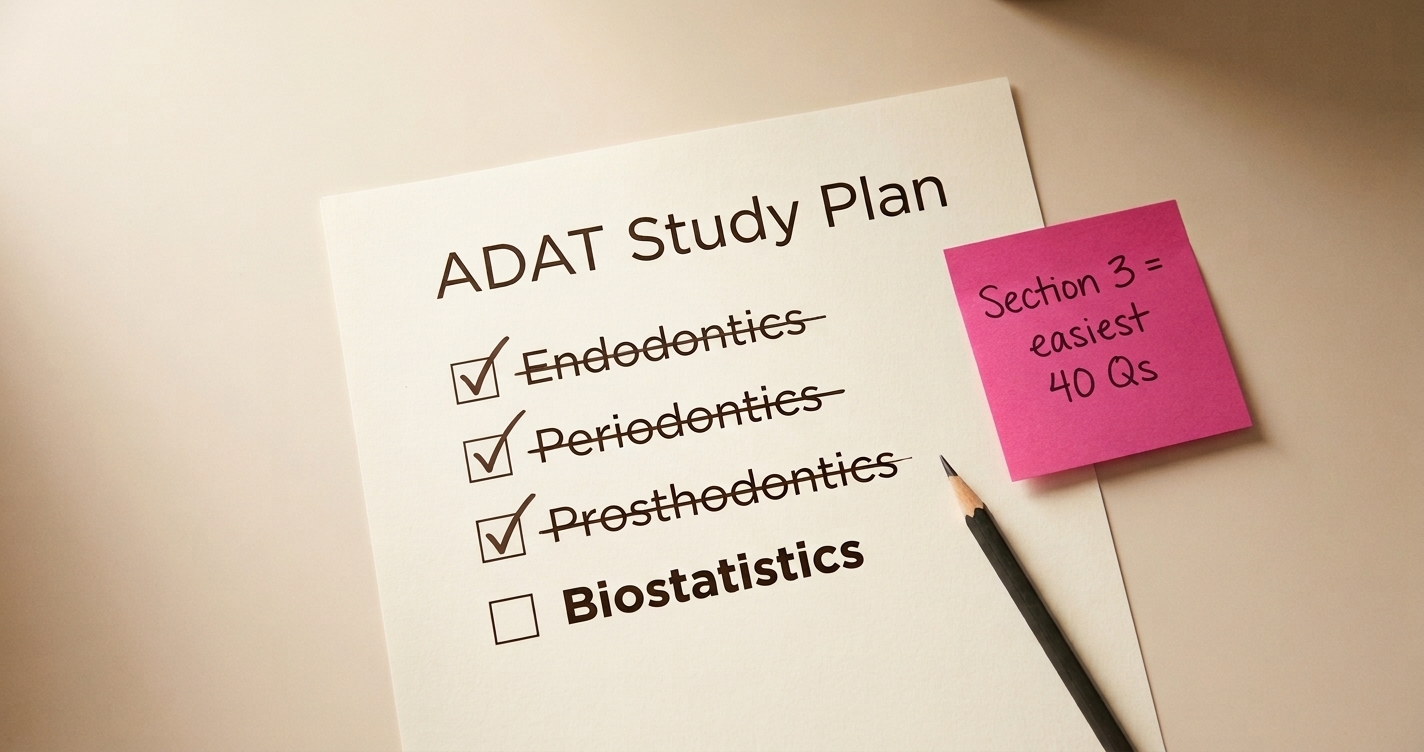
| Data, Research & Evidence-Based Dentistry | 40 | Biostatistics, study design, interpreting research |
| Total | 200 | 4.5 hours |
The testing window runs March 1 through August 31 each year. You take it at a Pearson VUE test center — same setup as the INBDE or DAT.
Scores range from 200 to 800, with 500 as the mean and a standard deviation of 100. There's no wrong-answer penalty. Your raw score converts to a scaled score, and you get percentile rankings showing how you compared to other test-takers.
Results arrive 3-4 weeks after your test date and are sent directly to the programs you selected during registration.
Who's Supposed to Take It
According to the ADA, the ADAT is designed for:
D3 and D4 students pursuing specialty training after graduation. If you're applying to residency programs in orthodontics, endodontics, periodontics, oral surgery, prosthodontics, pediatric dentistry, or other specialties, the ADAT is theoretically part of your application toolkit.
Practicing dentists looking to enter advanced education later in their careers. Maybe you've been in general practice for years and want to specialize — the ADAT provides a standardized measure of your current knowledge.
International dental graduates applying to advanced standing programs or bridging programs at U.S. and Canadian dental schools. For ITDs, the ADAT can demonstrate clinical and biomedical competency to admissions committees.
That's the official list. Reality is messier.
Where ADAT Actually Matters
The picture varies dramatically depending on your pathway.
U.S. Specialty Residency Programs
For orthodontics, endodontics, periodontics, oral surgery, prosthodontics, and other specialties, the ADA maintains an official list of programs showing ADAT acceptance status.
For the 2025-2026 cycle:
- Programs that require ADAT: None
- Programs that accept but don't require ADAT: Hundreds
- Programs that don't accept ADAT: Some
Harvard School of Dental Medicine explicitly states that ADAT scores "will not be considered for review of candidacy" — even if you submit them.
Penn Dental Medicine says ADAT scores "are not required for admission" but will be reviewed "if available."
OHSU confirms that "the ADAT is not required for any advanced dental education program in the 2025–2026 application cycle."
If you're a U.S. dental student applying to specialty residencies, ADAT is genuinely optional.
U.S. Advanced Standing Programs (for International Graduates)
Most U.S. advanced standing programs also don't require ADAT. Instead, they require the INBDE (or legacy NBDE Parts I and II).
Boston University explicitly states: "The ADAT is not required. However, a passing result on the U.S. Integrated National Board Dental Examination (INBDE) or NBDE Parts 1 and 2 are required for consideration."
University of Pittsburgh says ADAT is "preferred, but not required."
Canadian Advanced Standing Programs — ADAT is REQUIRED
This is where everything changes.
McGill University requires ADAT — and it's not just a checkbox. The preliminary assessment weighs your ADAT score at 70%, CASPer test at 20%, and CV at 10%. Your ADAT score is quite literally the majority of your initial evaluation.
University of Toronto IDAPP requires applicants to "write the Advanced Dental Admission Test (ADAT)" prior to the application deadline. The score must be from within the last three years.
For international dental graduates targeting Canadian pathways, the ADAT isn't optional — it's the single most important component of your application.
For U.S. Applicants: When a Strong ADAT Score Helps
If the ADAT isn't required for your target programs but you're considering taking it anyway, here's when it adds value:
Your academic record has inconsistencies. If you struggled early in dental school but improved, or if your GPA doesn't reflect your current ability, a high ADAT score provides external validation.
You're applying from an unfamiliar program. Admissions committees may not know how to evaluate your school's curriculum or grading standards. A standardized score gives them a benchmark.
You're an ITD applying to U.S. programs that accept ADAT. Even if not required, a strong score demonstrates competency in a format U.S. programs understand.
Tiebreaker situations. When candidates are otherwise equal, a strong ADAT score can tip the balance.
When the ADAT Hurts More Than Helps
When your target programs don't consider it. Harvard explicitly says ADAT scores "will not be considered for review of candidacy." Taking the exam for programs like this is wasted effort.
When a mediocre score attaches to your application. If you score below 500, that number follows you. Some candidates would be better off with no score than a weak one.
When you can't prepare properly. A rushed ADAT attempt yielding a 450 does more harm than good. If you can't dedicate 8-12 weeks of real preparation, don't take it.
The Content Breakdown
If you decide to take the ADAT, here's what you're actually facing.
Biomedical Sciences (80 questions)
This section covers the foundational sciences from your first two years of dental school:
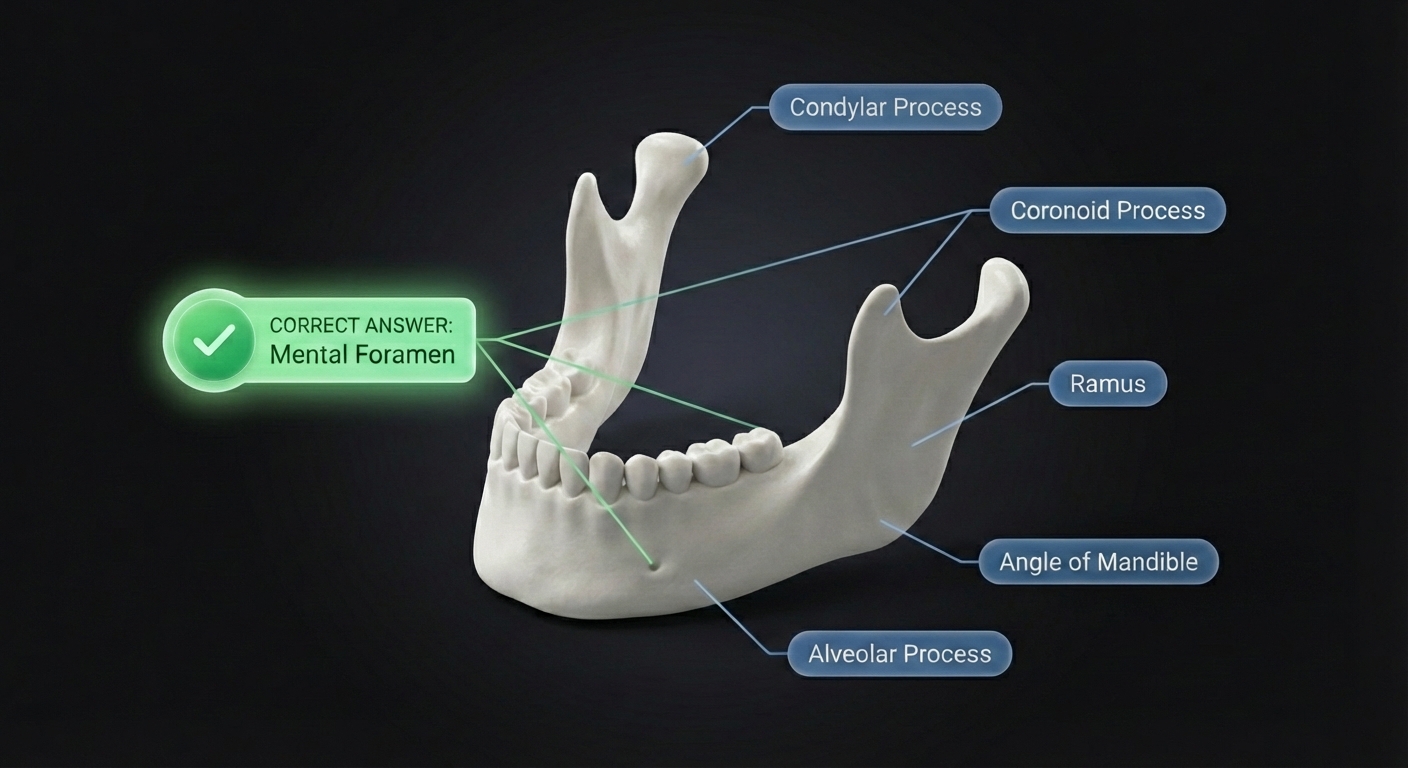
- Anatomical sciences: Head and neck anatomy, histology, embryology
- Biochemistry and physiology: Metabolic pathways, organ systems, homeostasis
- Microbiology: Oral pathogens, infection control, immunology
- Pathology: General and oral pathology, disease processes
If you've taken the INBDE, some of this will feel familiar. The difference: ADAT goes deeper into basic science mechanisms because it's assessing readiness for specialty training, not just general practice competency.
Clinical Sciences (80 questions)
A mix of standalone and case-based questions covering:
- Diagnosis and treatment planning: Clinical reasoning, differential diagnosis
- Patient management: Treatment sequencing, interdisciplinary care
- Specialty-specific content: Endodontics, periodontics, prosthodontics, oral surgery, pediatric dentistry, orthodontics
- Pharmacology and anesthesia: Drug interactions, pain management, medical emergencies
The case-based questions present patient scenarios with multiple questions attached — similar to INBDE Day 2 format, but with an expectation of deeper specialty knowledge.
Data, Research & Evidence-Based Dentistry (40 questions)
This section catches candidates who haven't touched biostatistics since dental school:
- Study design: RCTs, cohort studies, case-control studies, systematic reviews
- Statistical concepts: Sensitivity, specificity, positive/negative predictive values, confidence intervals, p-values
- Critical appraisal: Evaluating research quality, identifying bias, interpreting results
- Evidence-based decision making: Applying research to clinical scenarios
If you prepped for INBDE's FK10 section, you've seen this material. The ADAT version covers similar ground but expects deeper application.
Scoring: What the Numbers Mean
ADAT scores range from 200 to 800. Here's how to interpret them:
| Score Range | Percentile (Approximate) | What It Signals |
|---|---|---|
| 600+ | ~84th percentile | Highly competitive |
| 550-599 | ~69th-83rd percentile | Above average |
| 500-549 | ~50th-68th percentile | Average |
| 450-499 | ~31st-49th percentile | Below average |
| Below 450 | Below ~30th percentile | Weak |
There is no official "passing score." The ADAT isn't a licensure exam — it's an admissions tool. Programs interpret scores however they want, and most don't publish cutoffs.
The ADA provides percentile rankings with your score report, so you'll know exactly where you stand relative to other test-takers. A score of 550 might be the 72nd percentile one year and 68th the next, depending on the testing cohort.
Do You Need the ADAT or Not?
You MUST take the ADAT if:
You're an internationally trained dentist applying to McGill's DMD Advanced Standing program. The ADAT is required. Your score accounts for 70% of the preliminary assessment. There is no alternative. If you don't have an ADAT score, your application will not be considered.
You're an internationally trained dentist applying to the University of Toronto IDAPP. The ADAT is required. You must have taken it within the past three years. No ADAT, no admission.
You DON'T need the ADAT if:
You're a U.S. dental student applying to U.S. specialty residency programs. No U.S. specialty program (orthodontics, endodontics, periodontics, oral surgery, prosthodontics, pediatric dentistry) requires the ADAT for the 2025-2026 cycle. Some accept it, many ignore it.
You're an internationally trained dentist applying to U.S. advanced standing programs. Most U.S. advanced standing programs (BU, Pitt, NYU, USC, etc.) require the INBDE — not the ADAT. Check your specific programs, but ADAT is typically "preferred but not required" at best.
The ADAT is OPTIONAL (but potentially helpful) if:
You're applying to U.S. programs that "accept but don't require" ADAT. A strong score might help differentiate you. A weak score might hurt. It's a calculated risk.
Your academic record has gaps you want to address. A high ADAT score can offset a rocky GPA or demonstrate that your knowledge is current.
Summary Table
| Your Path | ADAT Required? | What You Need Instead |
|---|---|---|
| ITD → McGill (Canada) | YES (70% of assessment) | Also: CASPer, French proficiency |
| ITD → U of T IDAPP (Canada) | YES | Must be within 3 years |
| ITD → U.S. advanced standing | Usually NO | INBDE typically required |
| U.S. student → U.S. specialty residency | NO | Varies by specialty (some want GRE, OMFS wants CBSE) |
| U.S. student → GPR/AEGD | NO | — |
If you're targeting Canadian programs: take the ADAT seriously. It's not optional — it's the majority of your application.
If you're targeting only U.S. programs: verify requirements for each program. Don't assume you need the ADAT just because it exists.
If You're Taking It: Preparation Approach
The ADAT covers material you've theoretically already learned. The challenge isn't learning new content — it's recalling and applying content from years ago under timed conditions.
Start with a diagnostic. Take a practice exam to identify weak areas. If you're scoring 400 on biomedical sciences but 550 on clinical, you know where to focus.
Prioritize by section weight. Biomedical and Clinical Sciences are 80 questions each. Data/Research is 40. Don't spend equal time on all three.
Don't neglect biostatistics. The 40-question research section is where many candidates lose points. Sensitivity vs. specificity, study design interpretation, and evidence appraisal — these concepts need active review, not passive recognition.
Practice case-based reasoning. The Clinical Sciences section includes multi-question patient scenarios. Practice reading cases efficiently and answering related questions without re-reading the entire case.
Time yourself. 200 questions in 4.5 hours is 270 minutes — about 81 seconds per question. That's not generous. Build pacing into your practice from day one.
QuizOdontist offers ADAT-focused question banks covering all three sections. Our analytics show you exactly where your time is best spent — so you're not grinding biostatistics when your clinical reasoning needs work.
Summary
The ADAT is mandatory for some paths, optional for others, and irrelevant for a few. Know which category you're in before you register.
If you're targeting McGill or U of T: this exam is your application. Treat it accordingly.
If you're targeting U.S. programs: verify each program's stance. Don't assume. And if you do take it, score well — a weak ADAT helps no one.
Sources:
- ADA Advanced Dental Admission Test (ADAT)
- ADAT Scores - ADA
- McGill DMD Advanced Standing Requirements
- University of Toronto IDAPP
- Harvard School of Dental Medicine AGE Admissions
- Penn Dental Medicine Admissions
- Boston University Advanced Standing Requirements
- University of Pittsburgh International Advanced Standing
- OHSU Advanced Dental Education Programs