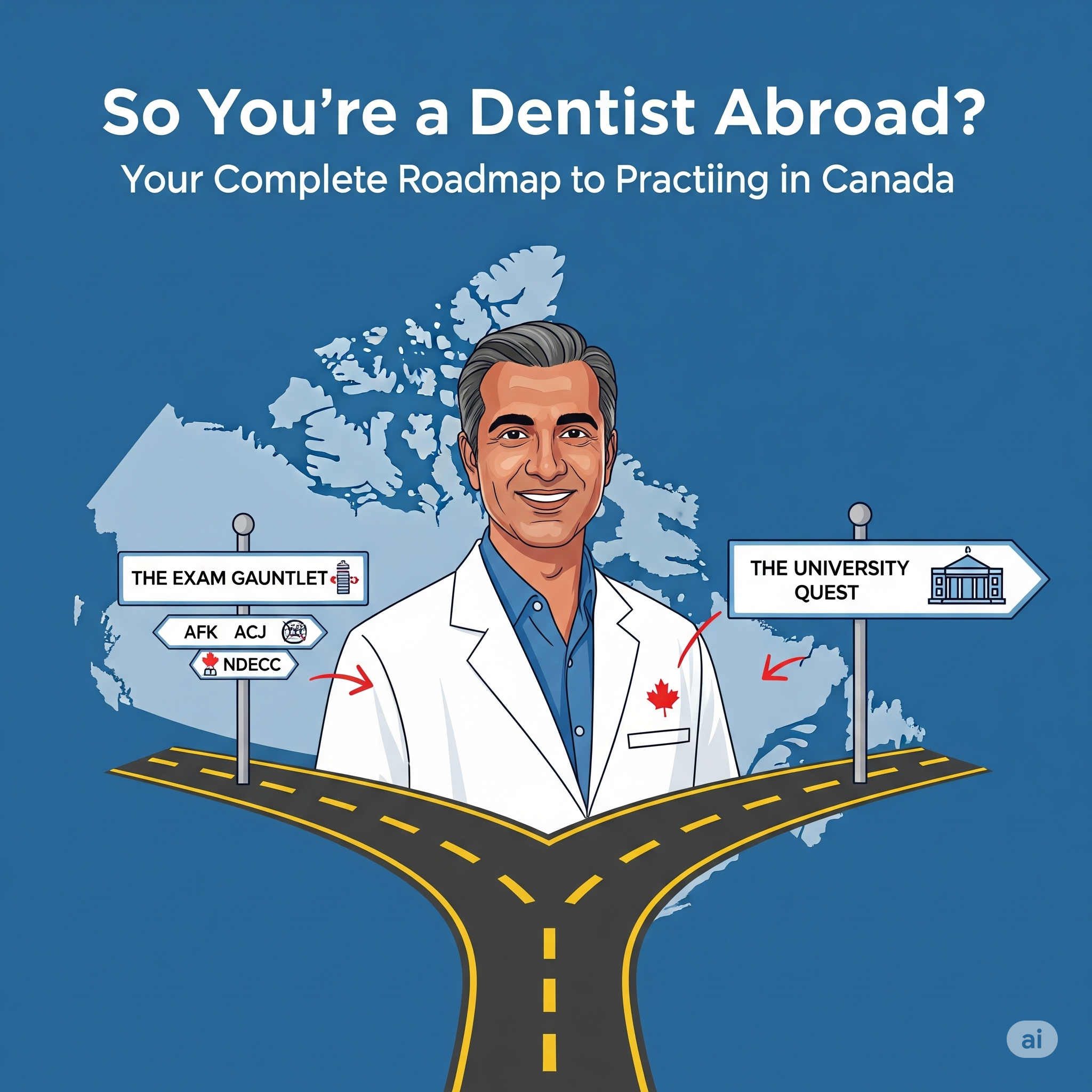

You earned your dental degree abroad. You're a trained clinician. You want to practice in North America.
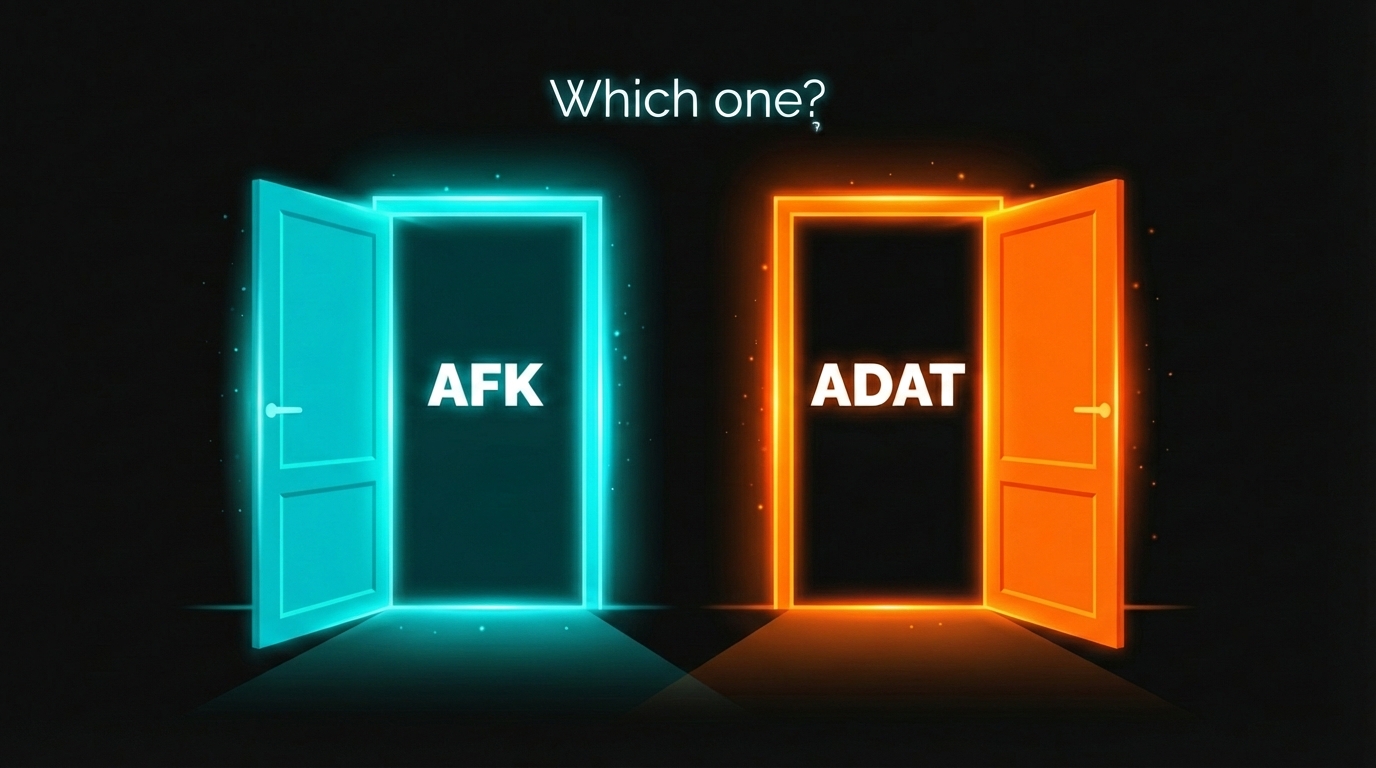
Now you're drowning in acronyms — INBDE, AFK, ACJ, ADAT, NDECC, OSCE — and every forum post contradicts the last one.
The U.S. and Canadian pathways are completely separate. The exams don't transfer. Passing one country's requirements gets you zero credit toward the other.
Choose the wrong pathway and you'll waste years studying for exams that don't count where you want to practice.
The Three Pathways at a Glance
| U.S. Advanced Standing | Canada: NDEB Equivalency | Canada: University Advanced Standing | |
|---|---|---|---|
| Governing body | JCNDE + State Boards | NDEB + Provincial Regulators | Canadian dental schools + Provincial Regulators |
| Entry exam | INBDE | AFK | ADAT |
| Additional exams | ADEX (after graduation) | ACJ → NDECC → Virtual OSCE | University clinical exams |
| Education required? | YES — 2-3 years | NO | YES — enter 2nd year (McGill) or 3rd year (U of T) |
| Timeline | 3-5 years | 1.5-2.5 years | 2.5-3 years |
| Approximate cost | $150,000-300,000+ USD | $12,000-25,000 CAD | $100,000-200,000+ CAD |
The key difference: The NDEB Equivalency Process lets you prove competency through exams without going back to school. Both U.S. and Canadian university pathways require additional education.
Three pathways. Three different entry exams. None of them transfer.
- U.S.: INBDE → dental school (2-3 years) → ADEX → state license
- Canada (no school): AFK → ACJ → NDECC → Virtual OSCE → provincial license
- Canada (with degree): ADAT → university advanced standing (2-3 years) → provincial license
The U.S. Pathway: INBDE + Advanced Standing + Clinical Exam
If you want to practice dentistry in the United States, here's what you're facing.
Step 1: Credential Evaluation
Before anything else, your foreign dental degree must be evaluated by a recognized service:
This confirms your degree is equivalent to a U.S. dental education. Without this, you can't proceed.
Step 2: Pass the INBDE
The Integrated National Board Dental Examination is the written licensure exam for all dentists in the U.S.
| Aspect | Details |
|---|---|
| Format | 500 multiple-choice questions |
| Duration | 2 days (Day 1: 360 questions/~8h, Day 2: 140 questions/~4h) |
| Content | Integrated basic + clinical sciences, heavy on case-based "Patient Box" questions |
| Scoring | Pass/Fail only. If you pass, you see "pass" — no numerical score. If you fail, you receive your scaled score (49-99 scale, need 75 to pass) for remediation |
| Pass rate | ~98% for U.S. dental students, ~75% for ITDs (2024 data: 25% failure rate) |
| Fee | $880 USD + $435 ITD processing fee = $1,315 USD |
| Administered by | JCNDE at Prometric centers |
Critical: Passing the INBDE does NOT allow you to practice dentistry. It's a prerequisite for the next step.
Step 3: Complete an Advanced Standing Program (2-3 Years)
This is where the U.S. pathway gets expensive.
Most states require ITDs to earn a DDS or DMD degree from a CODA-accredited dental school. Advanced standing programs compress this into 2-3 years (vs. 4 years for traditional students).
- Apply through ADEA CAAPID
- Programs are highly competitive — strong INBDE performance matters
- Tuition ranges from $100,000-200,000+
- Examples: NYU, BU, USC, Pitt, Columbia
A few states allow alternative pathways (specialty residency completion), but advanced standing is the most common route.
Step 4: Pass the Clinical Exam (ADEX)
After graduating from your advanced standing program, you need a clinical licensure exam.
Most states accept ADEX (administered by CDCA-WREB-CITA), which tests hands-on clinical skills with live patients or simulation. Fee: $2,795-3,595 USD depending on components. Some states have their own clinical exams.
Step 5: State Licensure
Finally, apply for licensure in your specific state. Requirements vary — some require jurisprudence exams, background checks, or additional documentation.
U.S. Pathway Summary
Credential Evaluation → INBDE (pass/fail) → Advanced Standing (2-3 yrs) → ADEX → State License
Total time: 3-5 years Total cost: $150,000-300,000+
The Canadian Pathway: NDEB Equivalency Process
If you want to practice in Canada, the pathway is fundamentally different — and faster.
The National Dental Examining Board of Canada (NDEB) offers an Equivalency Process that allows ITDs to prove competency through exams, without going back to dental school.
Step 1: Credential Verification (~10 weeks)
Submit your dental degree and transcripts to NDEB for verification. They confirm your education meets baseline requirements.
Step 2: AFK — Assessment of Fundamental Knowledge
The written knowledge exam, roughly equivalent to the U.S. INBDE in scope.
| Aspect | Details |
|---|---|
| Format | ~200 multiple-choice questions |
| Duration | Administered in two parts |
| Content | Biomedical sciences, applied clinical science |
| Offered | Twice per year (typically February and August) |
| Fee | $1,000 CAD (plus $900 one-time NDEB application fee) |
| Delivery | Paper-based across Canada OR electronic at Prometric centers |
You must pass the AFK before proceeding to the ACJ.
Step 3: ACJ — Assessment of Clinical Judgement
A computer-based exam testing clinical decision-making.
| Aspect | Details |
|---|---|
| Format | 120-150 single-answer and multi-answer MCQs |
| Content | Oral radiology, radiographic interpretation, clinical decision-making |
| Fee | $1,350 CAD |
| Administered | Electronically at Prometric centers (Canada, Australia, New Zealand) |
You must pass the ACJ before proceeding to the NDECC.
Step 4: NDECC — National Dental Examination of Clinical Competence
This is the hands-on clinical exam, administered in Ottawa.
| Component | What It Tests | Fee |
|---|---|---|
| Clinical Skills | Hands-on dental procedures using simulators (A-dec simulators, Kavo handpieces). Tests whether you can perform to Canadian standards. | $3,250 CAD |
| Situational Judgement | Problem-solving in work-related scenarios. | $3,250 CAD |
| Total | Both components required | $6,500 CAD |
- If you fail one component, you only repeat (and pay for) that component
- Offered throughout the year with multiple weekly sessions
- Must travel to Ottawa
Step 5: Virtual OSCE — Final Certification
The final hurdle for NDEB certification.
| Aspect | Details |
|---|---|
| Format | 200 questions (50 standalone MCQs + 150 case-based) |
| Fee | $2,000 CAD |
| Attempts | Maximum 3 attempts total |
| Locations | Across Canada, plus select international locations |
Pass the Virtual OSCE, and you're NDEB certified — eligible for provincial licensure.
Step 6: Provincial Licensure
Apply to the dental regulator in the province where you want to practice (e.g., RCDSO in Ontario, CDQ in Quebec). Requirements vary slightly by province.
Canadian Pathway Summary
Credential Verification → AFK → ACJ → NDECC → Virtual OSCE → Provincial License
Total time: 1.5-2.5 years Total cost: $12,000-25,000 CAD (including prep courses and retakes)
The Canadian University Pathway: ADAT + Advanced Standing
Canada offers a second route: university advanced standing programs. Unlike the NDEB Equivalency Process, this path requires additional schooling — but you enter as a 2nd or 3rd year student, not a freshman.
How It Works
- Pass the ADAT — This is your entry exam, not the AFK
- Apply to the program — Each university has its own admissions process and timeline
- Complete the program — Duration depends on the institution (see below)
- Graduate with a Canadian DDS/DMD — Then apply for provincial licensure
Currently, McGill and University of Toronto are the main programs. Each has a fixed structure — you don't choose which year to enter:
McGill DMD Advanced Standing
| Requirement | Details |
|---|---|
| Year placement | Enter 2nd year of 4-year DMD program |
| Program length | 3 years (extended from 2.5 years starting Sept 2025) |
| ADAT weight | 70% of preliminary assessment |
| CASPer test | 20% of preliminary assessment |
| CV | 10% of preliminary assessment |
| French proficiency | B2 level required (Quebec policy) |
| Priority | Quebec residents given priority |
| Tuition | ~$1,580 CAD/credit (international); verify current rates |
Source: McGill Dentistry
University of Toronto IDAPP (International Dentist Advanced Placement Program)
| Requirement | Details |
|---|---|
| Structure | 6-month IDAPP → enter 3rd year of 4-year DDS program |
| Total duration | ~2.5 years (6 months IDAPP + 2 years DDS) |
| ADAT | Mandatory (within past 3 years) |
| Eligibility | Canadian citizens or permanent residents only |
| IDAPP fee | ~$78,000 CAD (6-month preparatory program) |
| DDS Year 3-4 | ~$45,000 CAD/year (after IDAPP completion) |
| Class size | ~24 students per year |
Important: U of T IDAPP is not open to international students — you must have Canadian citizenship or PR status by the application deadline.
Source: U of T IDAPP
When to Choose This Path
- You want a Canadian dental degree, not just licensure
- You prefer structured education over self-directed exam prep
- You already have Canadian citizenship or PR status (required for U of T)
- You're targeting Quebec (McGill has French requirements but offers a recognized Quebec degree)
- Your ADAT score is strong (it's 70% of McGill's assessment)
Canadian University Pathway Summary
ADAT → University Admission → 2.5-3 Years of School → Canadian DDS/DMD → Provincial License
McGill: 3 years (enter 2nd year) U of T: ~2.5 years (6-month IDAPP + 2 years DDS, enter 3rd year)
Total cost: $100,000-200,000+ CAD (depends on program and residency status)
Note: U of T requires Canadian citizenship/PR. McGill prioritizes Quebec residents. Verify current fees directly with each program.
ADAT: Who Actually Needs It?
The Advanced Dental Admission Test (ADAT) causes the most confusion. Short answer:
| Your Path | ADAT Required? | Notes |
|---|---|---|
| U.S. advanced standing | NO | INBDE required instead |
| U.S. specialty residencies | No | Optional for most |
| Canada: NDEB Equivalency | NO | AFK is your entry exam |
| Canada: McGill | YES | 70% of your assessment |
| Canada: U of T | YES | Requires Canadian citizenship/PR |
Bottom line: ADAT is only for Canadian university programs. If you're doing NDEB Equivalency (exams only) or U.S. advanced standing, you don't need it.
Five Mistakes That Cost ITDs Years
"I passed INBDE, so I'm good for Canada too"
No. INBDE and AFK are completely separate exams administered by different bodies. Passing one gives you zero credit toward the other. You just spent months studying for an exam that doesn't count where you want to practice.
"I passed INBDE, so I can start practicing"
INBDE is not a license. It's a prerequisite. After passing, you still need to complete a 2-3 year advanced standing program at a U.S. dental school — then pass a clinical exam — then get state licensure. Budget $150,000-300,000 and 3-5 years.
"NDEB and McGill are the same pathway"
Canada has TWO completely separate routes:
- NDEB Equivalency Process — Entry exam: AFK. No tuition. Exam-based. ~$12,000-25,000 CAD total.
- University Advanced Standing — Entry exam: ADAT. Requires 2-3 years at McGill or U of T. ~$50,000-100,000+ CAD.
If you're studying for AFK but want McGill, you're preparing for the wrong exam. If you're studying for ADAT but plan to do NDEB Equivalency, same problem.
"I'll figure out which country later"
Every month you spend studying for the wrong exam is a month wasted. The content overlaps, but the exams don't transfer. Decide first. Study second.
"The NDECC is just another test"
It's not. The NDECC is a hands-on clinical exam in Ottawa where you physically perform procedures on simulators to Canadian standards. Many ITDs fail because their training differs from Canadian protocols. You need to practice the specific techniques they expect — not just know the theory.
If You Want Both Countries
Some ITDs want licensure in both countries. Bad news: you need to complete both pathways separately.
- For U.S.: INBDE + Advanced Standing + ADEX + State Licensure
- For Canada: AFK + ACJ + NDECC + Virtual OSCE + Provincial Licensure
There's no shortcut. No exam transfers between systems.
Strategic approach: Many ITDs start with Canada (faster, cheaper), gain experience, then pursue U.S. advanced standing later if desired.
Quick Reference: Which Exam Do I Need?
| Your Goal | Entry Exam | Pathway |
|---|---|---|
| Practice in U.S. | INBDE | → Advanced Standing (2-3 yrs) → ADEX → State License |
| Practice in Canada (no school) | AFK | → ACJ → NDECC → Virtual OSCE → Provincial License |
| Practice in Canada (with degree) | ADAT | → University Advanced Standing (2-3 yrs) → Provincial License |
| U.S. specialty residency | INBDE | ADAT optional |
| Both U.S. and Canada | Both | Complete both pathways separately |
Summary
The U.S. pathway requires you to complete an accredited dental program — even if you've practiced for years. INBDE is step one, not the finish line.
The Canadian pathway lets you prove competency through a sequence of exams without additional schooling — but you must pass all four (AFK, ACJ, NDECC, Virtual OSCE) to qualify for provincial licensure.
Both pathways lead to full licensure. Neither transfers to the other.
Pick your destination. Verify current requirements directly with JCNDE (U.S.) or NDEB (Canada). Then commit fully to that pathway.
Studying for the wrong exam is the mistake that costs ITDs the most time.
Sources:
- JCNDE — INBDE
- NDEB — Equivalency Process
- NDEB — AFK
- NDEB — ACJ
- NDEB — NDECC
- NDEB — Virtual OSCE
- ADA — Licensure for International Dentists
- ADEA CAAPID
- McGill DMD Advanced Standing
- University of Toronto IDAPP