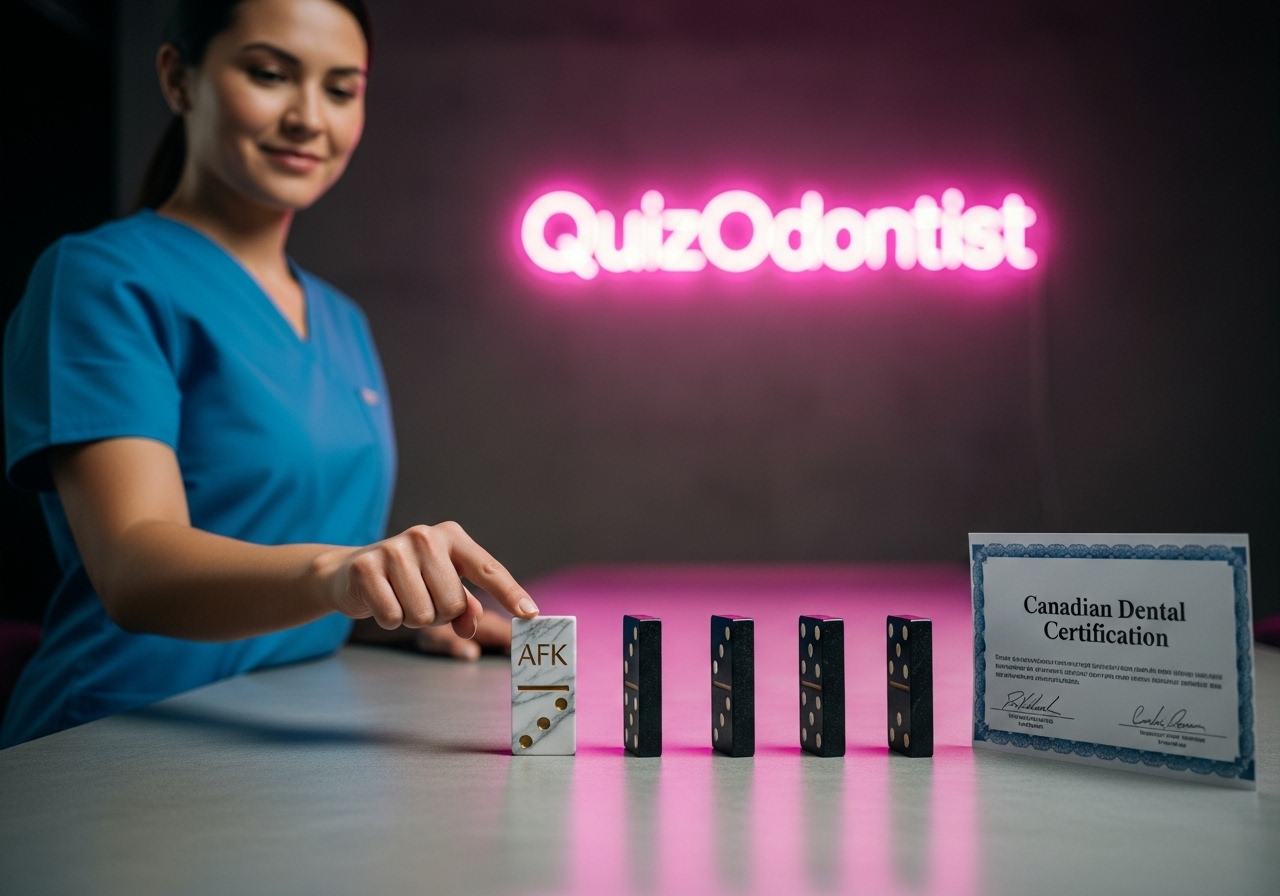
Two out of three AFK candidates fail. Not because they didn't study. Not because they weren't good dentists back home. But because they spent months practicing the wrong things—and their $400 mock exams never told them.
At QuizOdontist, we've watched this happen over and over. A candidate grinds through five expensive mocks. Scores hover around 70%. They walk into the real exam feeling prepared. They fail. And when we look at their practice history, the pattern is always the same: they kept getting tested on subjects they already knew while their actual weak spots barely showed up.
That's not bad luck. That's how traditional mocks are designed. And it's costing people their careers.
Why Traditional Mocks Are Built For Them, Not You
Creating a genuinely personalized exam experience is expensive. It requires a massive question bank, sophisticated randomization, and infrastructure that lets each student get a different test. Most prep companies don't want to build that.
So they don't.
Instead, you get:
- The same 500-question bank that's been recycled since 2019
- A fixed subject distribution that ignores your specific weaknesses
- Three to five attempts, then you're done—buy another package
- Zero ability to focus on what you actually need
This isn't incompetence. It's a business model. Static content is cheap to maintain. Limited attempts create artificial scarcity. Fixed distributions mean they never have to think about your individual needs.
You pay premium prices. You get a commodity product.
The Myth of the Average Candidate
Here's the assumption baked into every traditional mock exam: that there's such a thing as an "average" AFK candidate, and that testing this imaginary person will somehow help everyone.
There isn't. And it won't.
Consider who actually takes the AFK. A dentist who graduated in Brazil fifteen years ago and has been running a successful practice. A fresh graduate from Pakistan who aced their final exams six months ago. A mom from Egypt who left dentistry to raise her kids and is coming back after eight years. A prosthodontist from Iran with deep specialty knowledge but gaps in general practice areas.
These four people have almost nothing in common except the exam they're about to take. Their strengths are different. Their gaps are different. Their starting points are different. The Brazilian practitioner probably crushes clinical scenarios but struggles with basic science recall. The fresh graduate remembers the textbooks but lacks clinical intuition. The returning mom needs to rebuild everything. The specialist knows one area cold and needs to fill in the rest.
What do traditional mocks offer all four of them? The exact same 150 questions. The exact same subject distribution. The exact same difficulty curve.
This isn't just inefficient—it's disrespectful. It treats your specific situation as irrelevant. It assumes your time doesn't matter enough to warrant a tool that actually adapts to your needs.
You're not average. Your prep shouldn't be either.
The Hidden Tax: Time You'll Never Get Back
Most AFK candidates fixate on the dollar cost. But money isn't the real problem.
Consider this math:
A typical mock takes 3-4 hours. If 30% of the questions cover subjects you've already mastered, that's roughly 60-70 minutes answering questions that won't improve your score. Per mock.
Take five mocks? That's nearly six hours of practice time—gone. Not wasted on hard material. Not wasted on weak areas. Wasted on subjects you already know, simply because the mock couldn't adapt to you.
Six hours is enough time to do 200 targeted Pharmacology questions. Six hours is enough to review every drug interaction that's likely to appear on the real exam. Six hours is enough to turn a 55% Pharma score into a 75%.
Instead, you spent it answering Periodontics questions you could do in your sleep.
The Problem With "More Practice"
The instinctive response to struggling with mocks is to take more of them. If five mocks didn't work, take ten. If ten didn't work, take twenty.
This logic is backwards.
Research on skill acquisition—from chess to surgery to language learning—consistently shows the same thing: targeted practice outperforms volume. A violinist who spends an hour on the three bars she keeps fumbling improves faster than one who plays through entire pieces repeatedly.
The AFK is no different. Ten generic mocks will never improve your Pharmacology score as much as fifty focused Pharmacology questions with immediate review.
But traditional mocks don't give you that option. They decide what you practice. You just show up and answer whatever they put in front of you.
What Changes When You Control The Variables
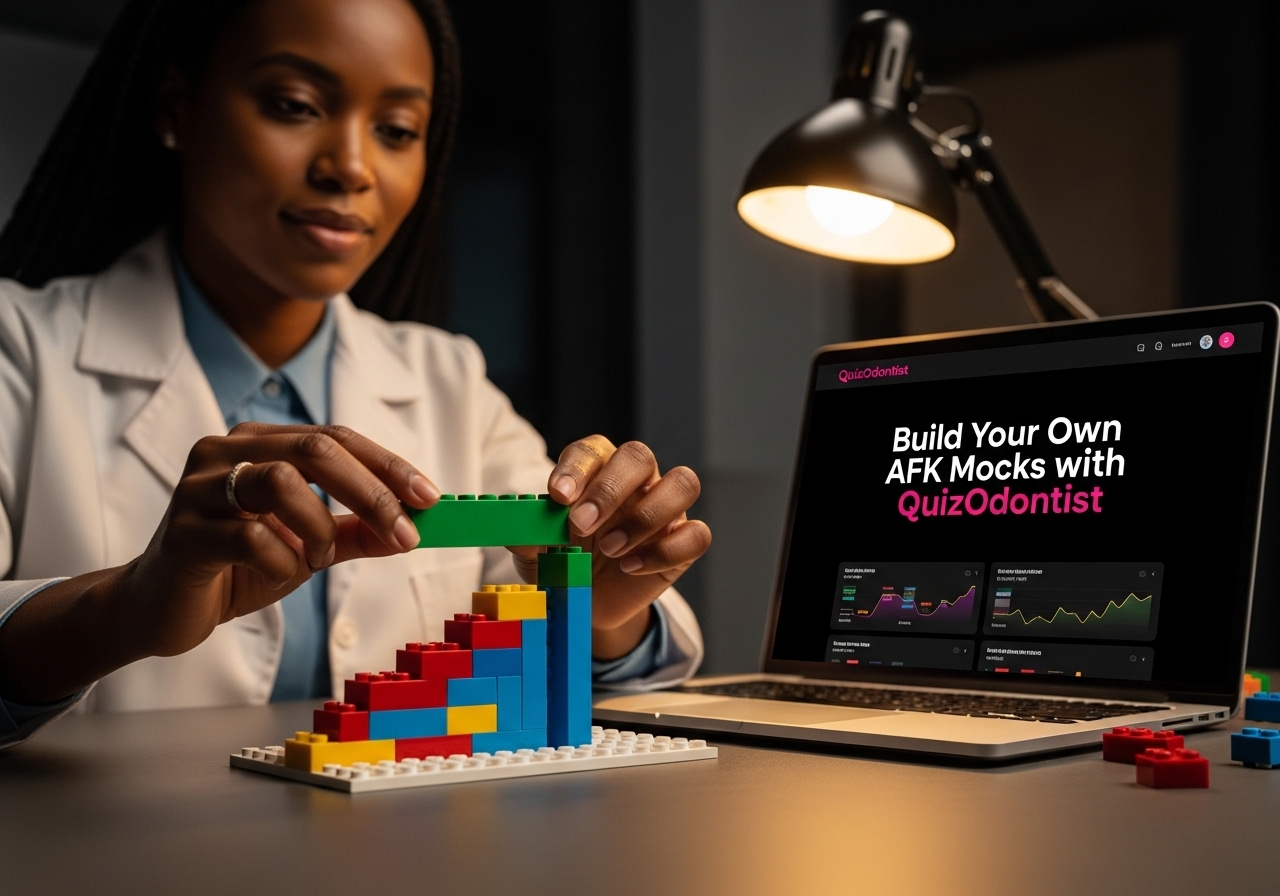
Here's what Saturday morning looks like with QuizOdontist's Custom Mock Builder:
You sit down. You open the builder. You select:
- 50 questions
- 60% Pharmacology (your weakest area)
- 25% Oral Pathology (needs reinforcement)
- 15% Biomedical Sciences (maintenance)
- Medium difficulty
You click "Create." The exam generates in seconds.
Every single question is relevant to what you need to practice right now, today, based on where you actually are in your prep.
You finish in 75 minutes. You score 58%—lower than your usual mocks, because you deliberately weighted toward weak areas. But now you have a list of exactly which Pharmacology concepts tripped you up. You review them. You create flashcards. Tomorrow, you'll hit those concepts again.
That 58% isn't a failure. It's a map showing exactly where to dig.
Why Unlimited Attempts Change Everything
There's a psychological dimension to mock exams that nobody talks about.
When mocks are expensive and limited, you start treating them like final exams. You study for the mock. You stress about the mock. You put off taking the mock until you feel "ready."
This completely defeats the purpose.
Mocks aren't supposed to be performance evaluations. They're diagnostic tools. They exist to show you where the gaps are, so you can fill them. Treating a mock like a final exam is like treating a blood test like a job interview—you've confused the measurement with the thing being measured.
When mocks are unlimited, the psychology shifts. A 58% stops being a failure and starts being information. You bombed Pharmacology? Good. Now you know. Take another mock tomorrow with 80% Pharmacology and see if you've improved.
This shift—from performance mindset to learning mindset—is often the difference between candidates who plateau and candidates who keep improving.
What Separates The 33% Who Pass
You already know the pass rate. What you might not know is why it's so low—and why effort alone doesn't fix it.
The candidates who pass aren't smarter. They didn't go to better dental schools. They don't have access to secret study materials or inside information.
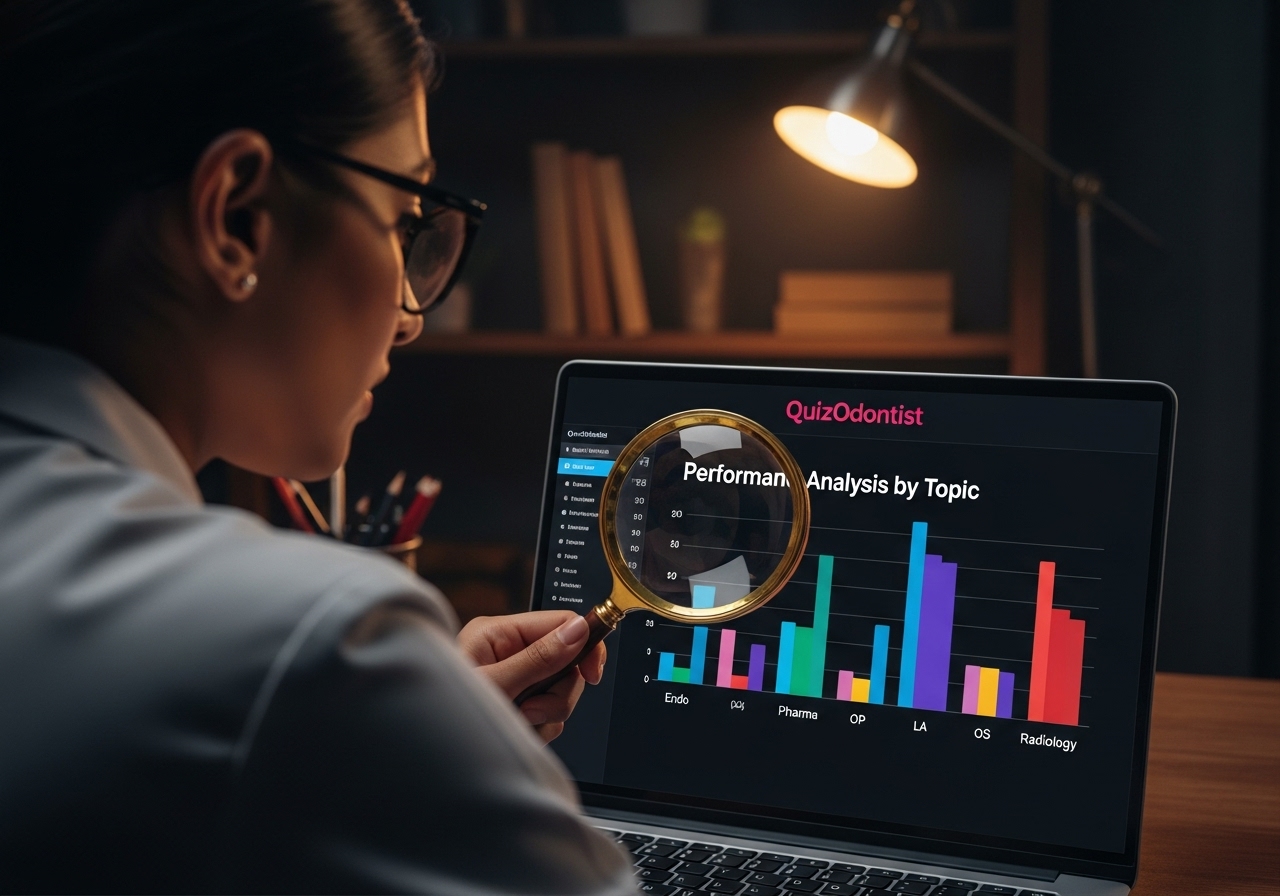
What they have is a systematic approach to identifying weaknesses and eliminating them. They treat mock exams as diagnostic tools, not performance tests. They adjust their practice based on what the data tells them. When they score poorly in Pharmacology, they don't just "study harder"—they drill Pharmacology specifically until the gap closes.
The candidates who fail often work just as hard. Sometimes harder. But they're grinding through generic content that tests them on everything equally, hoping that volume will eventually cover their weak spots. It won't. It never does.
What This Means In Practice
If you've been taking traditional mocks and feeling like you're not improving, you're not crazy. The tool is limiting your progress.
If you've been avoiding mocks because they're expensive and stressful, that's a rational response to a poorly designed system.
If you've been struggling with specific subjects but your mocks keep testing you on everything equally, that's not a flaw in your preparation—that's a flaw in your mock exams.
The fix isn't to work harder. The fix is to practice differently.
Next Step