There's a moment in the INBDE that catches people off guard.
It's not the hard questions. It's not the length. It's when you're staring at a Patient Box with twelve fields of information and you can't figure out which detail actually matters. The clock is running.
Knowing dentistry isn't enough. The INBDE tests whether you can find what you know inside a wall of clinical noise, under time pressure.
Most prep courses teach content. Pharmacology. Pathology. Anatomy. You need that. But they don't prepare you for the format. They don't show you what it's like to read a Patient Box that includes the patient's occupation (retired accountant, why is that even there?) while you're hunting for the one finding that answers the question.
That's what this post is about. Not content. Format. What the questions actually look like, and how to stop the format from eating your time.
The Patient Box Problem
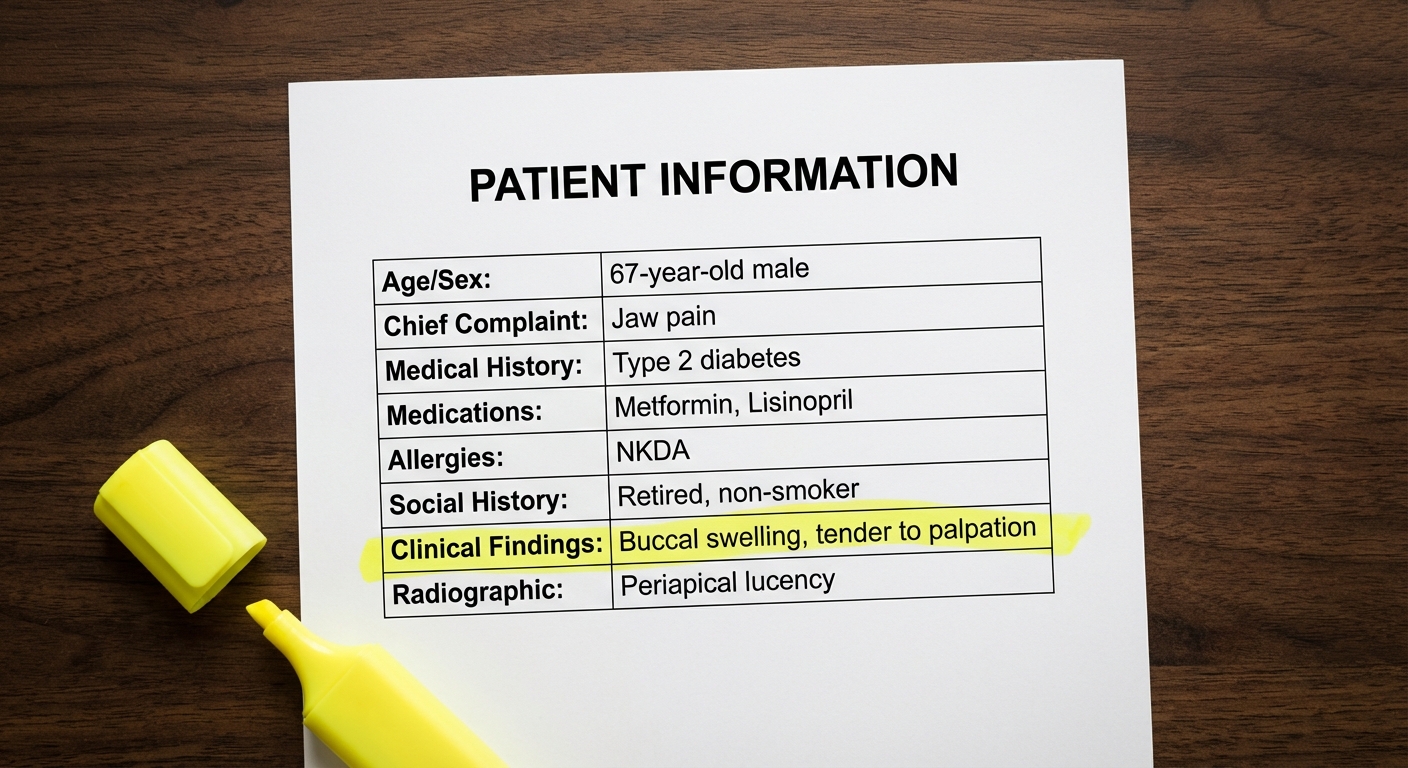
This is a real-format itemset. You get a Patient Box, then five questions that all reference it. The box stays on screen while you work through the questions.
69-year-old male
My jaw has a dull ache, and I've noticed my tongue seems swollen lately.
Recent history of a spontaneous rib fracture, chronic fatigue, and unexplained weight loss.
Naproxen (Aleve) 500mg BID for bone pain.
NKDA
Retired accountant, non-smoker.
Regular dental care until 3 years ago.
BP 132/84 mmHg, HR 76 bpm, RR 16 br/min
Generalized pale oral mucosa. Macroglossia is present with firm, waxy nodules on the lateral borders of the tongue. Mild cervical lymphadenopathy.
Cephalometric and panoramic radiographs reveal multiple well-defined, non-corticated 'punched-out' circular radiolucencies in the calvarium and the posterior mandible.
Look at what mattered and what didn't.
The social history ("retired accountant") was irrelevant. Vital signs didn't matter. Dental history was noise. But clinical findings and radiographic findings carried every single question.
The JCNDE stuffs Patient Boxes with information you don't need. They want to see if you can filter.
Three Formats, Three Different Skills
The INBDE uses three question formats. Understanding the difference changes how you spend your time.
Standalone questions are independent. Each one is its own thing. Some still include a brief patient scenario, but there's no shared context with other questions. Day 1 is mostly standalones: 300 of them across the first three sections. You need to average about 63 seconds per question. That's not a lot of time to second-guess yourself.
Itemsets give you a Patient Box and then 3-6 questions that all reference it. The box stays on screen. You're not supposed to read it top-to-bottom. Read the question first, then hunt through the box for what you need. Most people do it backwards and waste time.
Cases are itemsets with something extra: an image, a chart, a table. Radiographs. Periodontal charts. Or a 2×2 contingency table for biostatistics questions, which trips a lot of people up.
Biostatistics: The Section Everyone Ignores
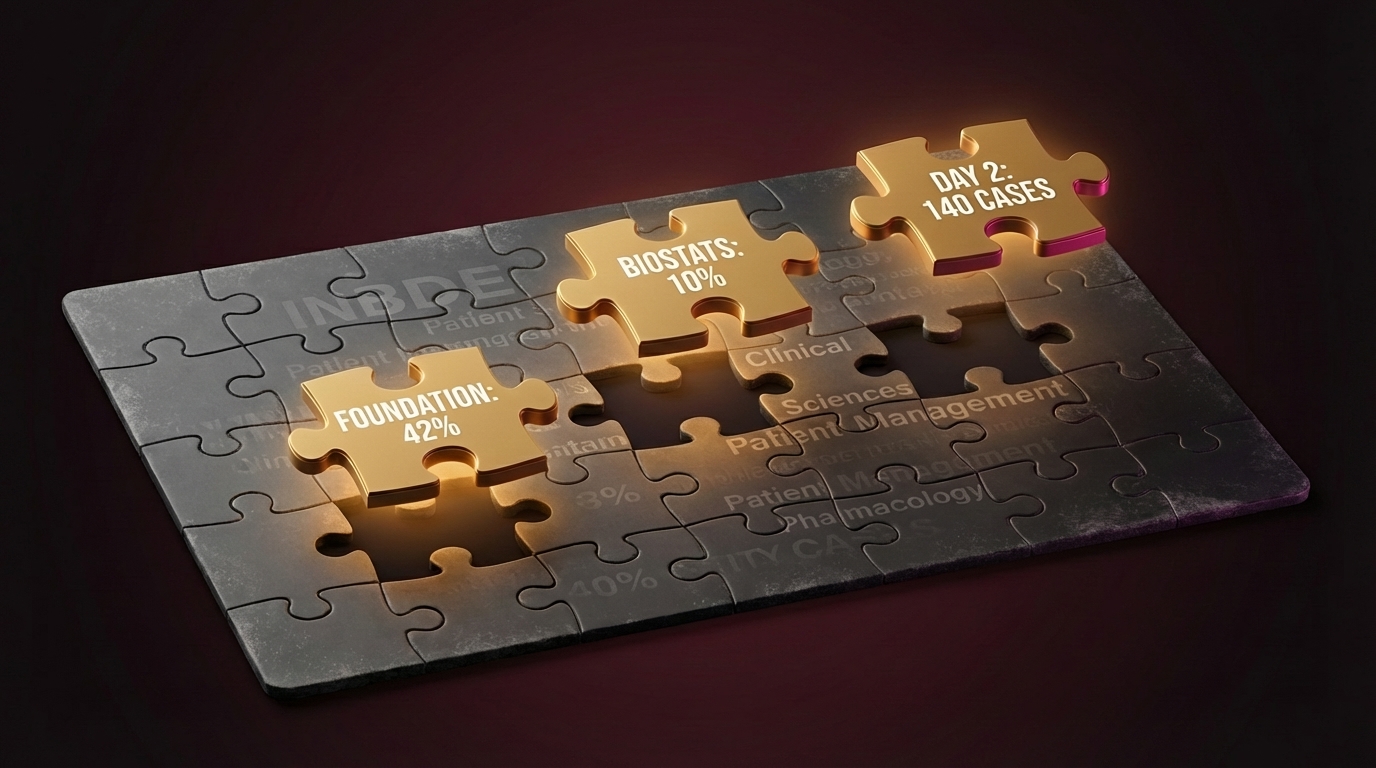
About 10% of the INBDE is biostatistics. Roughly 50 questions. Most candidates barely study it because it doesn't feel like "real dentistry."
But these questions are predictable. Almost always a 2×2 table. Almost always asking for sensitivity, specificity, PPV, or NPV. If you can work a table quickly, you bank easy points while everyone else panics.
A researcher tests a new light-based caries detection device on 200 extracted teeth, comparing results to histological confirmation (the gold standard).
Device Validation Results
| Disease +Caries Present | Disease -Caries Absent | Total | |
|---|---|---|---|
| Test +Device Positive | 90TP | 20FP | 110 |
| Test -Device Negative | 10FN | 80TN | 90 |
| Total | 100 | 100 | 200 |
The formulas aren't hard. The hard part is remembering which formula answers which question under time pressure. Practice until the pattern is automatic.
Time Will Break You Before Content Does
Day 1 is eight hours. 360 questions. The first three sections are standalones, then you shift to case-based questions in section 4.
Day 2 is four hours. 140 questions. Everything is case-based.
Day 2 feels shorter, but it's harder. Every question has a Patient Box. You can't bang through them like standalones. And you're walking in already exhausted from the day before.
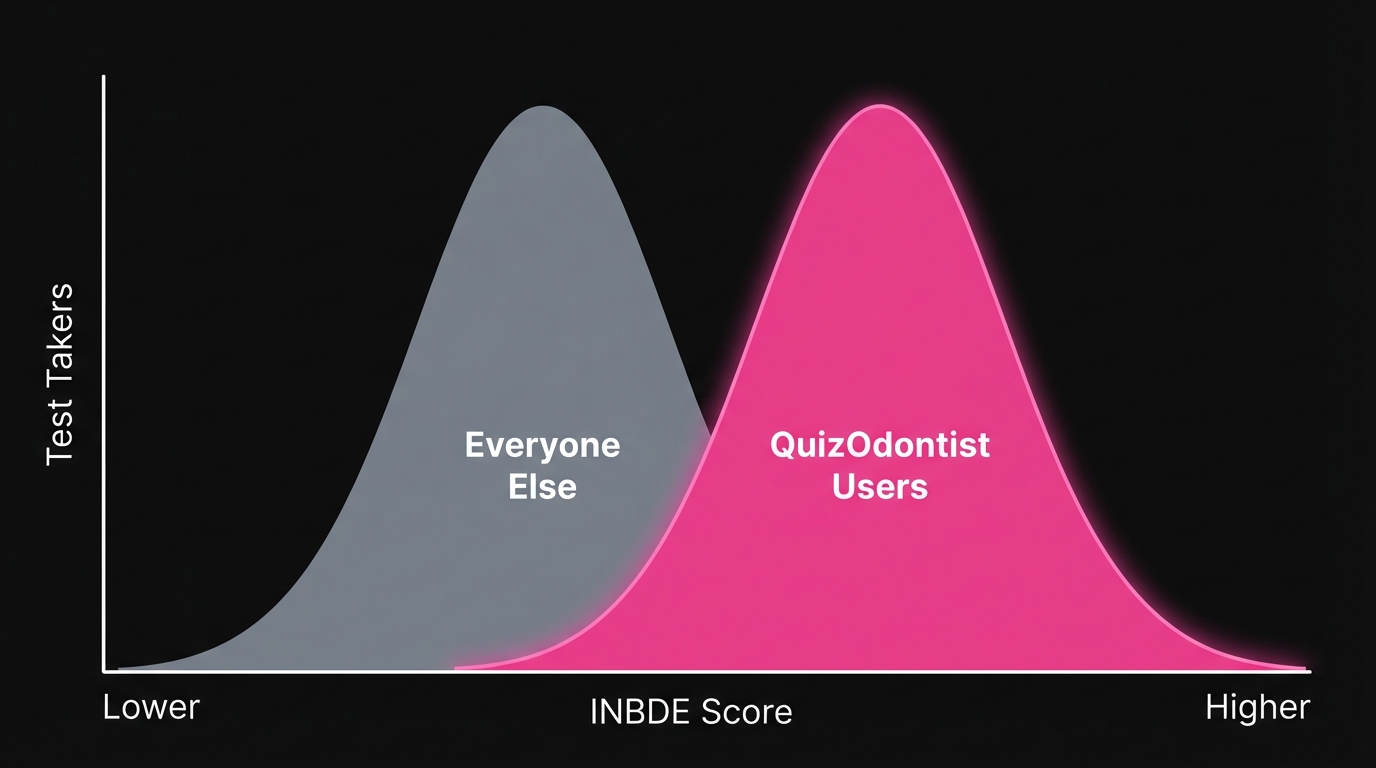
The candidates who pass aren't necessarily smarter. They're faster. They've practiced the format enough that reading a Patient Box doesn't require conscious thought anymore.
What Actually Helps
Patient Boxes: read the question first, then hunt through the box for what you need. Don't read top to bottom. Most of it is noise. The occupation, the exact blood pressure, when they last saw a dentist. Noise. Train yourself to skip it.
Biostatistics: memorize the 2×2 layout. Sensitivity is TP/(TP+FN). Specificity is TN/(TN+FP). When you see "sensitivity" in a question, your hand should already be moving to the right cells. Make it automatic.
Time: standalones get 60-90 seconds. Stuck past 90? Mark it and move. Spending three minutes on one question is how you run out of time on twenty others.
Day 2: you'll be tired. Accept it. The cases are harder, but you also have more time per question. Slow down a little. It's fine.
Practice These Formats
The questions above are from our bank. Try more for free if you want.
The INBDE is passable. But you have to practice the format, not just the content. The candidates who pass have seen enough Patient Boxes that filtering becomes automatic. They've done enough 2×2 tables that the formulas are reflex.
Get there before exam day.
Sources: